
For doctors
Doctors
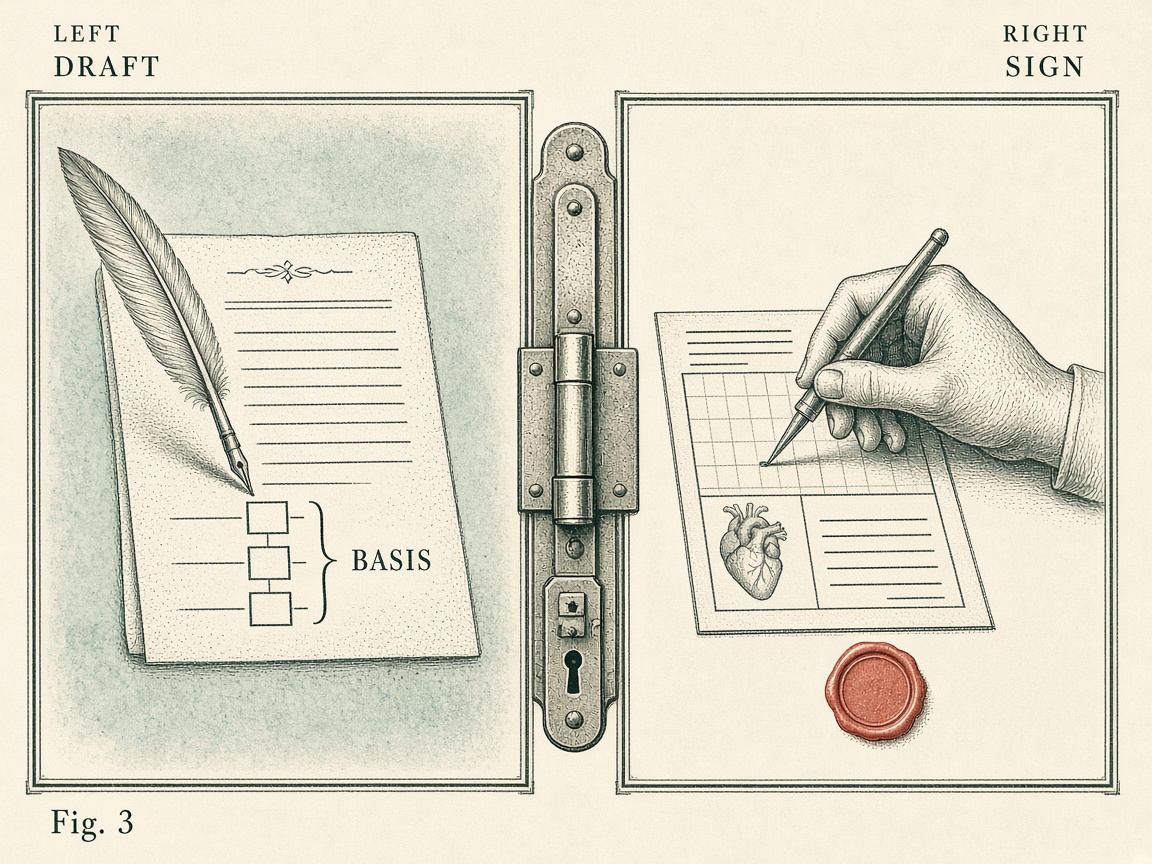
Talk to the patient. The system drafts. You sign. You remain the author of the chart.
Documentation currently costs one to two hours for each hour of care. The note is often optimized for billing, not for the next clinician who reads it.
Beys attacks that cost at the source. You talk to the patient. Ambient capture and structured extraction draft the encounter. You review. You sign.
You remain the author. AI is the drafter.
Work in the encounter
The encounter workbench holds the draft note, codes, differential, plan, and safety checks.
The council is not a single oracle. Several models assess. Disagreement is visible. That disagreement is signal.
Every draft carries a basis: inputs, evidence, and versions. You can inspect why the draft said what it said.
Yellow care-gap chips appear at the visit. They are deterministic prevention items, not a pop-up storm.
Landings
Default landing is the patient registry. An ED doctor lands on the emergency board. A radiology doctor lands on the worklist. Department is an attribute, not a second product.
What Beys does not do
Beys does not diagnose in your name. Beys does not put an unsigned draft into the chart. Beys does not ask you to trust a score without a basis.
If AI is down, deterministic drug–drug, allergy, and dose checks still run.
Related reading
- Safety — draft, sign, red floor.
- Product — the outpatient loop and the council.
- Docs: safety model